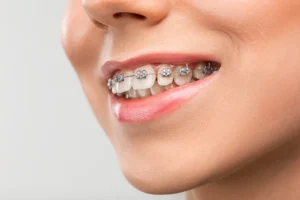
Customers frequently ask whether Invisalign corrects overbites. They also ask if Invisalign can close gaps and correct crooked teeth. The answers to these questions vary based on the specifics of your case. There are several types of malalignments of the teeth that may be treated with Invisalign. Generally speaking, larger malalignments of your teeth are not able to be corrected with Invisalign. The only way to truly determine if your case is able to be corrected with Invisalign is to have an orthodontic evaluation.
What Is an Overbite?
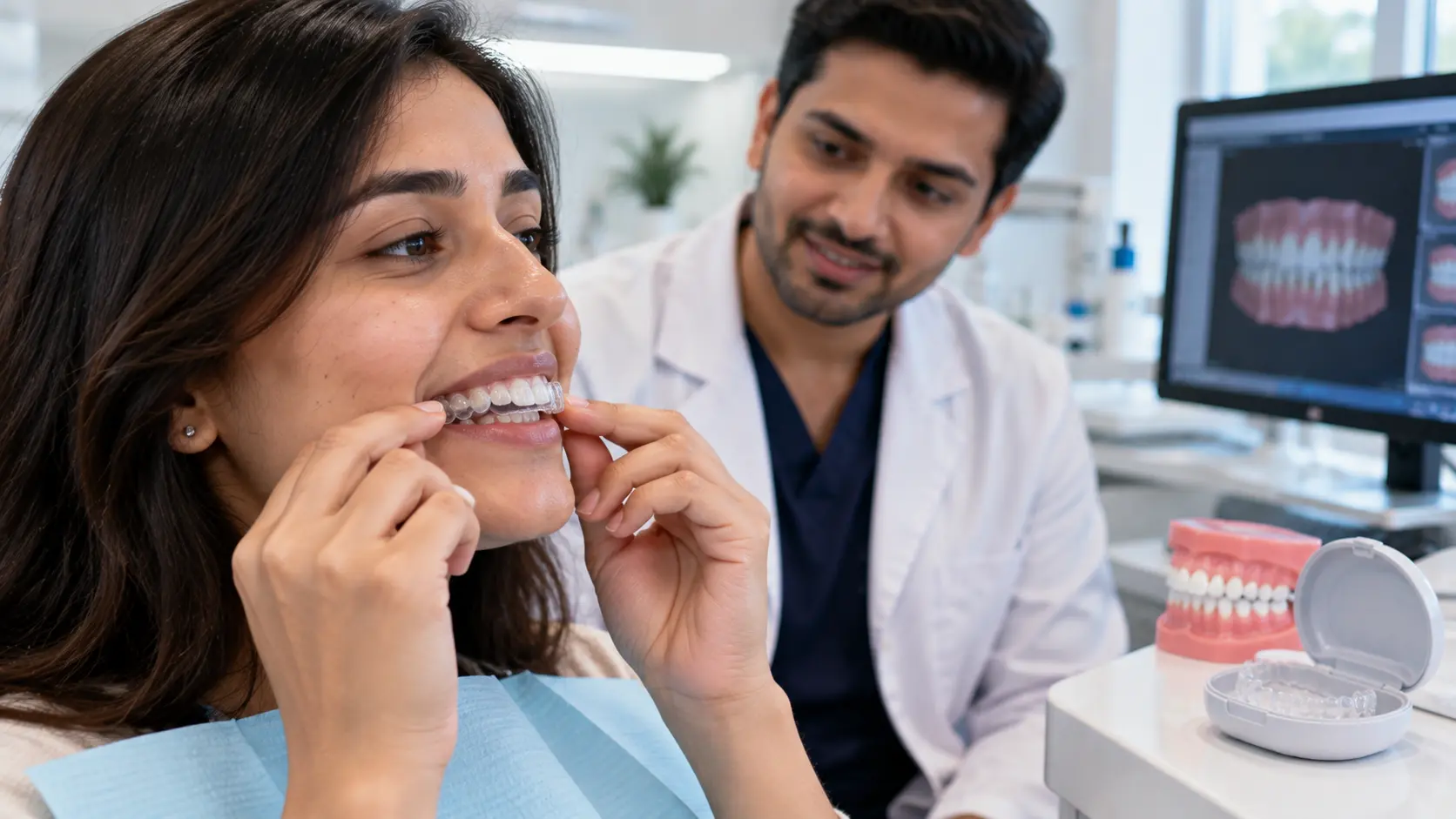
When the lower front teeth are covered by the upper front teeth, it is referred to as an overbite. In more severe cases of overbite, all lower front teeth may be completely covered by upper front teeth. This is called a deep bite. A very slight vertical overlap of the front teeth is acceptable.
An overbite can be caused by an underlying concern with the patient’s teeth alignment. It is possible to have an overbite due to various reasons, including the relationship between the upper and lower jaws.
An orthodontist can identify the cause of an overbite only after a detailed evaluation of the patient. Therefore, it is not always possible to determine the adequate treatment for overbite without an evaluation of the patient.
Can Invisalign Fix Overbite?
In some cases, Invisalign can correct overbites. Invisalign will move your teeth in various ways depending on your customized plan.
In order for Invisalign to change the way your teeth meet, your Invisalign aligners will need to move your teeth in specific ways.
Invisalign will not be able to correct every type and every degree of an overbite. Your orthodontist will look at the bigger picture to see if Invisalign will be a good option for you.
- The severity of the overbite
- The position and inclination of the teeth
- The overall bite relationship
- Whether the concern is mainly dental or related to jaw position
- The amount of tooth movement required
- The patient’s dental health
- The desired treatment outcome
For some patients, aligners may be a good option. For others, the best option may be braces or other forms of orthodontic treatment.
Will Invisalign Fix Overbite in Every Case?
It is not possible to answer the question ‘Will Invisalign correct an overbite?’ without a comprehensive assessment of the case.
An overbite can be composed of several elements and an overall assessment needs to be made to evaluate if any of these elements may be corrected with Invisalign. More complex bites may need a combination of orthodontic and restorative treatment to correct.
An orthodontic consultation is not to make a decision on treatment with Invisalign. The goal is to understand if Invisalign is able to accomplish the adjustments to the orthodontic elements which may exist in the case.
How Is an Invisalign Overbite Assessed?
Orthodontists evaluate your bite and how your teeth align.
This evaluation may include:
- Examining how the upper and lower teeth meet.
- Checking tooth position, spacing, crowding, and rotations.
- Reviewing photographs, scans, or other dental records when needed.
- Understanding your treatment concerns and goals.
- Planning the tooth movements required to improve the bite.
- Determining whether clear aligners can achieve those movements appropriately.
Understanding all of the above helps the orthodontist create a treatment plan to move your teeth and improve your bite. The assessment also allows the orthodontist to see if Invisalign or clear aligners are an option for you.
What About Invisalign Overbite Before and After Results?
Prospective invisalign patients are drawn to before and after photos for good reason. Many hope to visualize potential changes to their own bite with similar photos.
Before-and-after examples can provide a general visual reference, but they should not be treated as a prediction of your own treatment outcome.
Two patients with similar looking overbites may have entirely different orthodontic issues. As a result, their treatment plans and outcomes may be completely different.
In assessing before and after pictures, it is important to note the nature of the orthodontic problem that has been addressed as opposed to the change in appearance of the teeth.
Your orthodontist may be able to identify your potential changes in bite and may be able to explain what is realistically possible.
Can Invisalign Fix Gaps Between Teeth?
Clear aligners can correct some forms of dental spacing, and many patients interested in closing gaps in their smile ask about options for invisible correction of gap teeth, like Invisalign.
If the absence of a tooth leaves a space in the dental arch, and the surrounding teeth are moving away from the space, then a dental aligner may move the adjacent teeth closer to the space to help close the gap.
Other reasons for space may exist, including overlapping of the dental arches, malformed teeth, or even a small dental arch. Before choosing a course of action, the reason for the space should be determined.
What Are Invisible Braces for Teeth Gap?
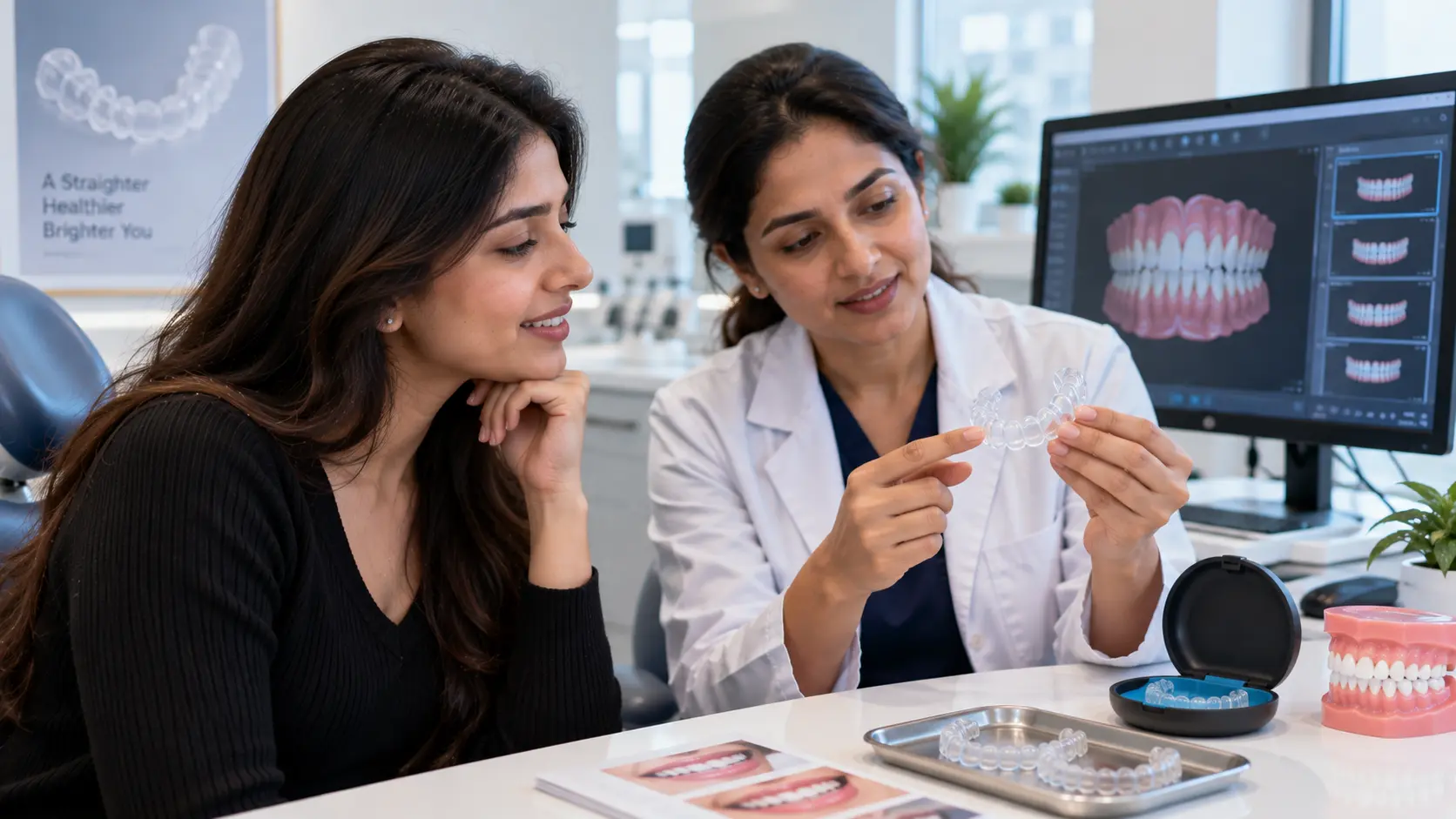
Clear aligners are a clear alternative to traditional metal braces to correct gaps and other orthodontic issues. Clear aligners are essentially invisible braces for the teeth gap.
Clear aligners are customized to fit the teeth and are removable. Compared to metal braces, clear aligners provide the advantage of removing the aligners while eating and brushing.
Despite these advantages, the key to successful treatment with aligners is adherence to the prescribed treatment plan and follow-up appointments.
Can Invisalign Help With Crooked Teeth?
Many people want to correct crooked or overly crowded teeth. Clear aligners may be able to correct these issues, assuming the movements required of the teeth are within the limits of what aligners can achieve.
The complexity of the malalignmentof the teeth, as well as multiple other factors (i.e. the relationship of the upper and lower jaws, the amount of space available, the patient’s bite, etc.), determines the treatment required to correct a malalignment of the teeth.
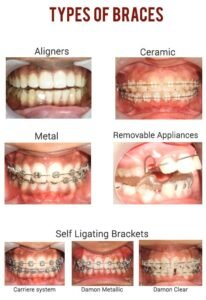
For many patients, treatment with clear aligners is possible. Alternatively, treatment with traditional braces may be necessary.
The decision of whether to utilize Invisalign or braces is based on the specific needs of the patient. Thus, it cannot be said that Invisalign is always better than traditional braces.
When Might Additional Treatment Be Needed?
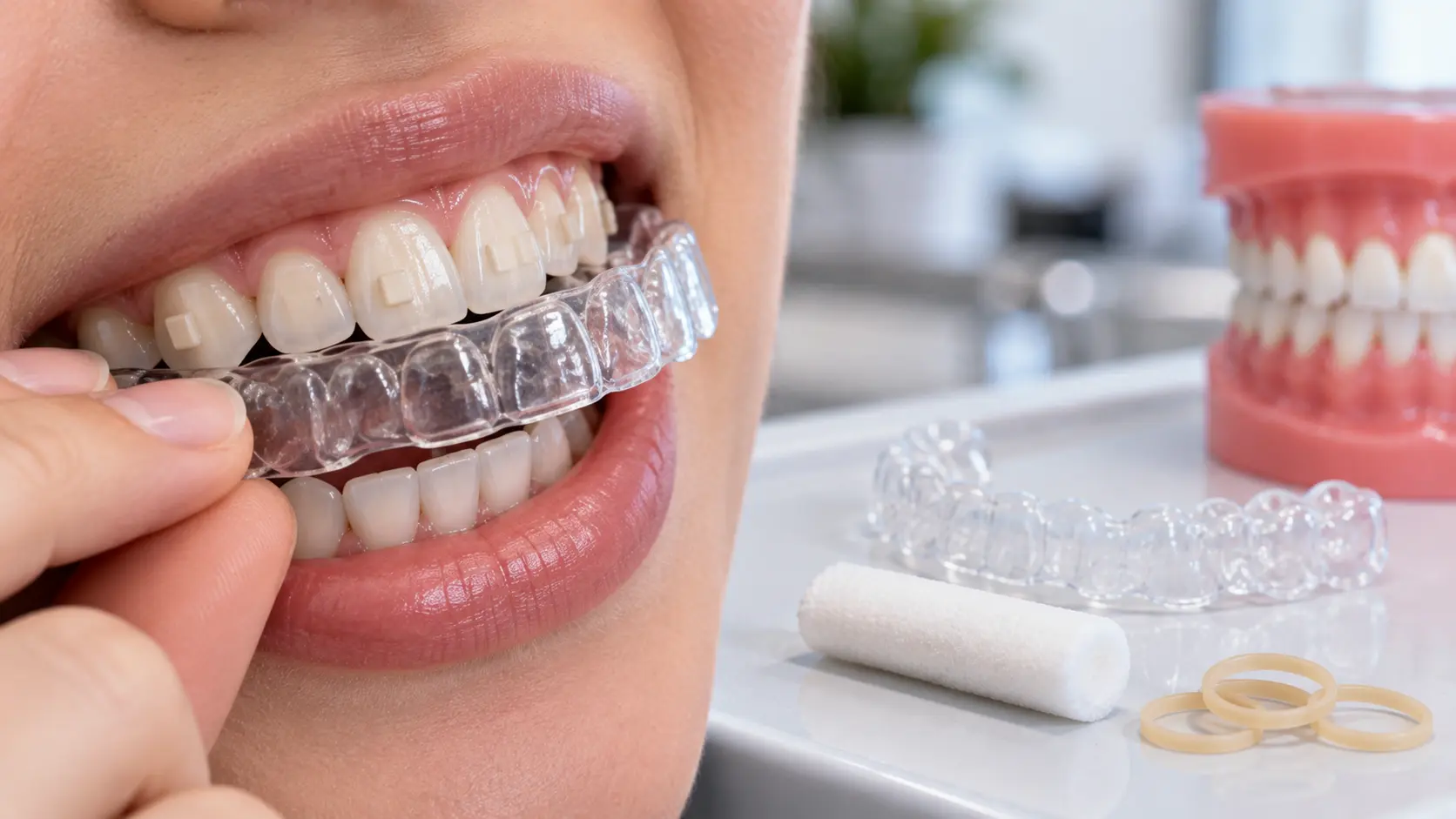
Various add-on orthodontic components may be necessary for the same patient in addition to the aligners.
Depending on the treatment plan, these may include:
- Attachments placed on selected teeth
- Orthodontic elastics
- Additional aligners for refinement
- Other orthodontic appliances
- Braces instead of or alongside aligner treatment in selected situations
These features may be used when particular tooth movements require additional control.
It must be kept in mind that the objective of orthodontic treatment is to address the needs of the patient rather than opting for a treatment which is less visible to others.
Why an Orthodontic Consultation Is Important
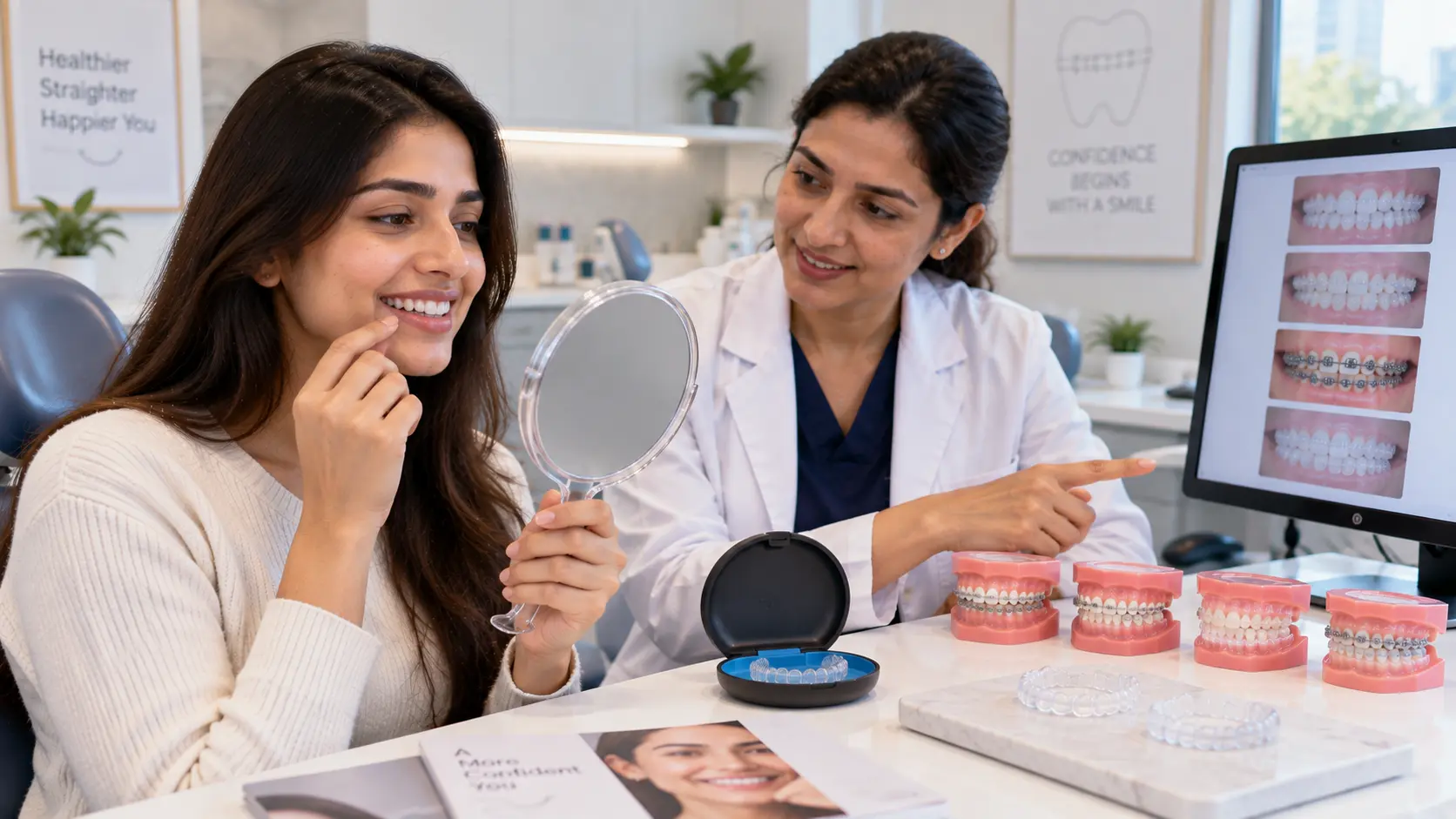
Find out more about Invisalign online, but in-person consultations will be necessary to diagnose your specific concerns (e.g. overbite, gap, crooked teeth, etc.).
During an orthodontic consultation, your orthodontist can assess:
- Your bite relationship
- The severity of your overbite
- Tooth alignment and spacing
- Crowding and rotations
- The amount of movement required
- Your dental condition
- Your treatment goals
- Whether aligners or braces may be more appropriate
Every patient is different, and what works for one patient to achieve a goal may not work for another patient to achieve the same goal.
Discuss Your Treatment Options
Invisalign is an option to correct your overbite, gaps and crooked teeth. To find out if Invisalign is right for you, an orthodontic assessment will evaluate your case and determine treatment options that are applicable and relevant to you.
Contact Dr. Mathesul Invisalign Orthodontist Braces & Dental Implant Clinic to discuss your concerns and understand which approach may be appropriate for you. Take the first step toward better oral health and informed orthodontic care.
Call us today at 8983101099 or email us at dailydentist@gmail.com to book your consultation.
Final Thoughts
Can Invisalign correct overbites? Invisalign can help close gaps and correct some cases of overbites and misaligned teeth. The appropriateness of Invisalign in a given case relies on several factors such as the patient’s bite, the position of the teeth, the extent of the dental issue requiring correction, and the patient’s goals.
A correct diagnosis of your bite and teeth by your orthodontist is essential to determine the best approach to correct your malocclusion. Your orthodontist is best positioned to decide if Invisalign is the best option for your case. They may also decide that a traditional braces approach would be more appropriate.