While researching orthodontic treatment, patients learn about issues including tongue posture, muscles of the face and neck, jaw development, breathing, and alignment of the bite. Some issues are discussed as habits or exercises, while others require custom orthodontic interventions.
Mewing, myofunctional therapy, Myobrace and jaw expansion are examples of orthodontic interventions and gradual expansion of the jaw, and all these are discussed together. However, they do not mean the same thing, and all these interventions cannot be prescribed to every patient.
Knowing the interpretation of each technique is the first step. Once this is accomplished, the orthodontist or other dental specialist will determine the age of the patient, the growth stage, the bite and position of the teeth, the jaw, habits of the patient, and the overall plan of treatment, and whether or not treatment is warranted.
This report describes the techniques. The main distinctions of these techniques are also highlighted.
Table of Contents
ToggleWhat Exactly Is Mewing?
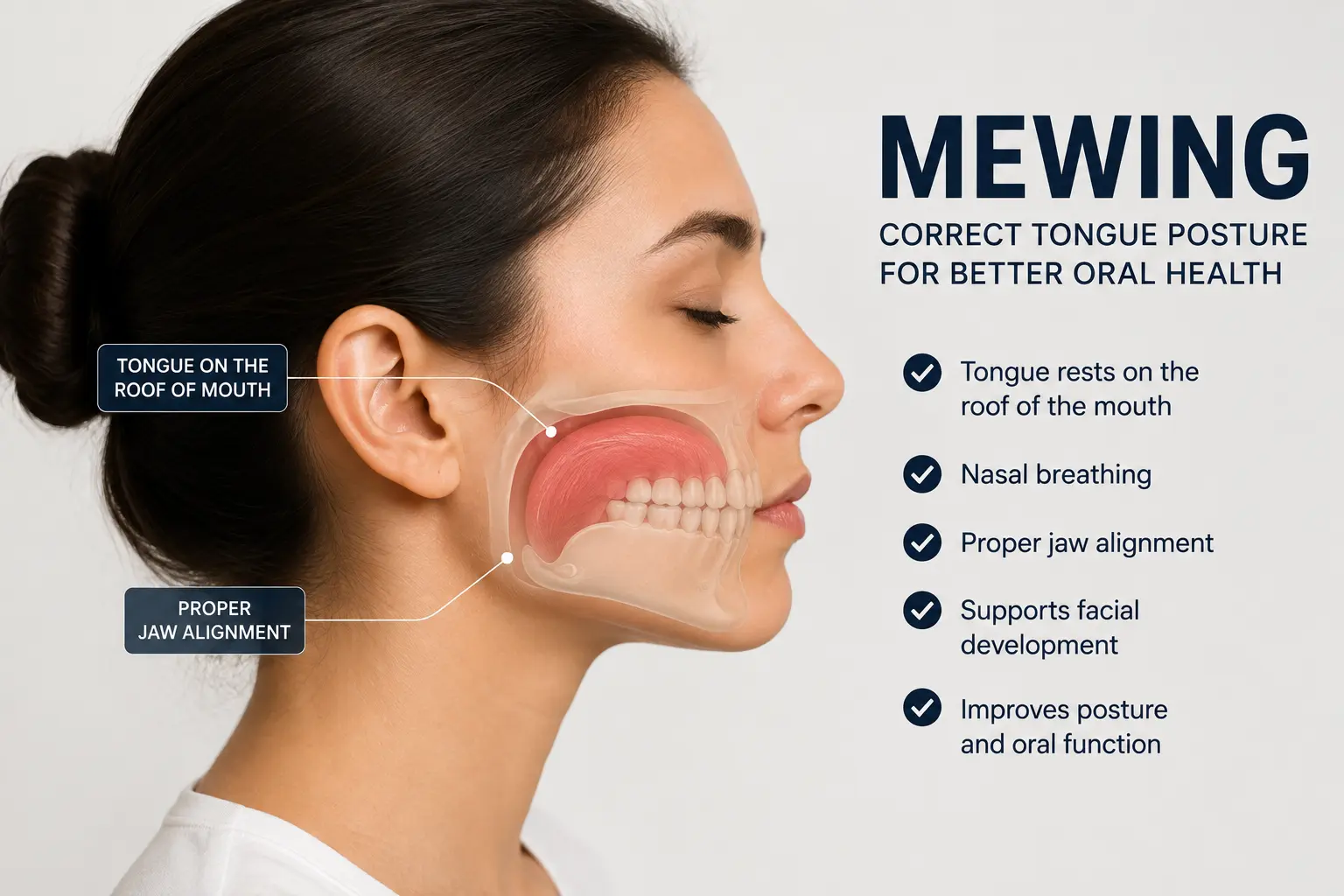
Mewing is using the tongue to target the roof of the mouth to aid in facial and jawline development. Mewing became trendy on social media, and people believe it can help change the facial structure and help slim the jawline.
There is, however, a big difference between knowing what normal tongue placement is and believing that using the tongue in this way can reshape the jawline or replace orthodontic treatment.
The American Association of Orthodontists believes that claims mewing helps fix issues related to orthodontic treatment and helps to reshape the jawline are unfounded and not based on science.
Why Are People Interested in Mewing?
Many ask about mewing because they want to find out about:
- Tongue resting position
- Mouth breathing
- Facial development
- Jawline appearance
- Tooth alignment
- Oral posture
Posture of the tongue is one part of a multi-factorial system consisting of the muscles, bones and teeth of the faciomaxillary complex. Deliberately assuming a certain position of the tongue will not result in deliberate changes in face structure.
Applying uneven or excessive force can change the position and bite of the teeth. With this in mind, do-it-yourself methods can never replace a difficult orthodontic assessment.
If you are concerned about the position of your tongue, the way you swallow, the way you breathe, or the position of your bite, it is best to find the reason(s) for your concerns instead of following a popular internet challenge.
How Do Myofunctional Appliances Support Oral Function?
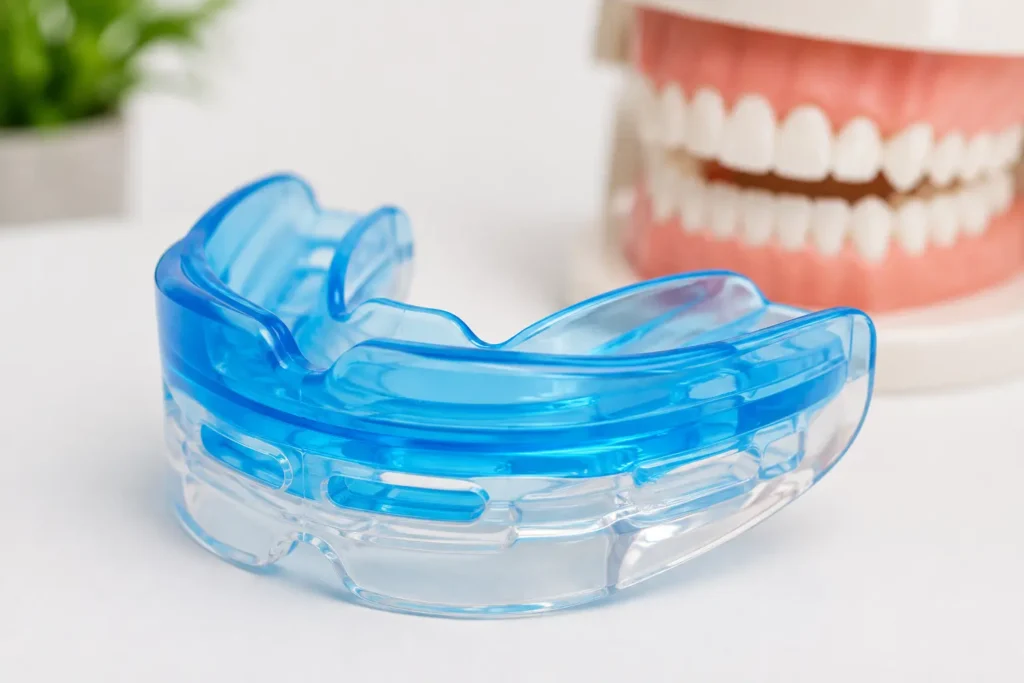
Myofunctional appliances are designed to help the muscles and the functions of the mouth and face. Appliances can be used with other therapies, behavioral changes, exercises, and concurrent dental or orthodontic therapies.
The term “myofunctional treatment” goes beyond myofunctional appliances. Myofunctional treatment considers the effects of the tongue, lips, cheeks, and other oral and facial muscles when the body is at rest, during functional activities of the body, such as breathing and swallowing, as well as speaking.
This goes beyond addressing changes to appearance of the jaw using a do-it-yourself (DIY) technique.
What Role Do Mouth Exercises Play in Oral Function?
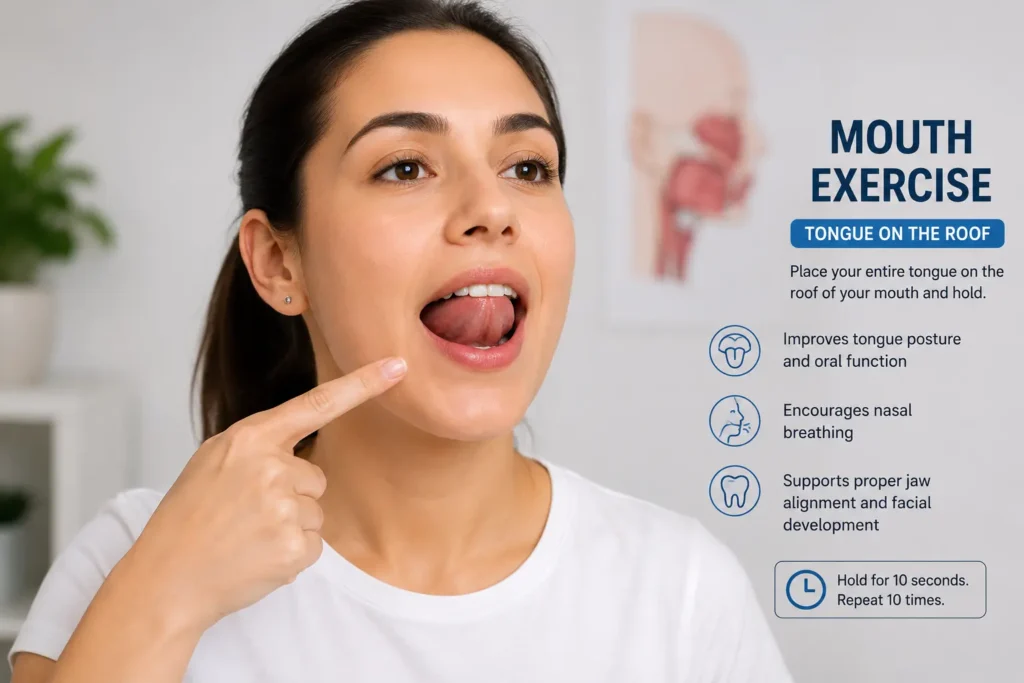
Some mouth exercises may be incorporated into an orofacial myofunctional therapy approach when appropriate.
There can be a lot of variety in exercises designed to improve muscles and movements of the mouth and face. Some therapies use mouth exercises related to:
- Movement and placement of the tongue
- Closing the lips
- Patterns of swallowing
- Muscle coordination in the mouth
- Habits and posture of breathing
However, these exercises should not be viewed as general solutions to orthodontic problems.
Orofacial myofunctional therapy is still in the early research stages and is considered a relatively new field. One of the better quality reviews published by the American Speech-Language-Hearing Association found that participants reported improvements in swallowing, chewing and breathing, and changes to oral behaviors post treatment. The quality and variety of the methods and research used were considered weak.
What Is Myofunctional Therapy and How Does It Work?
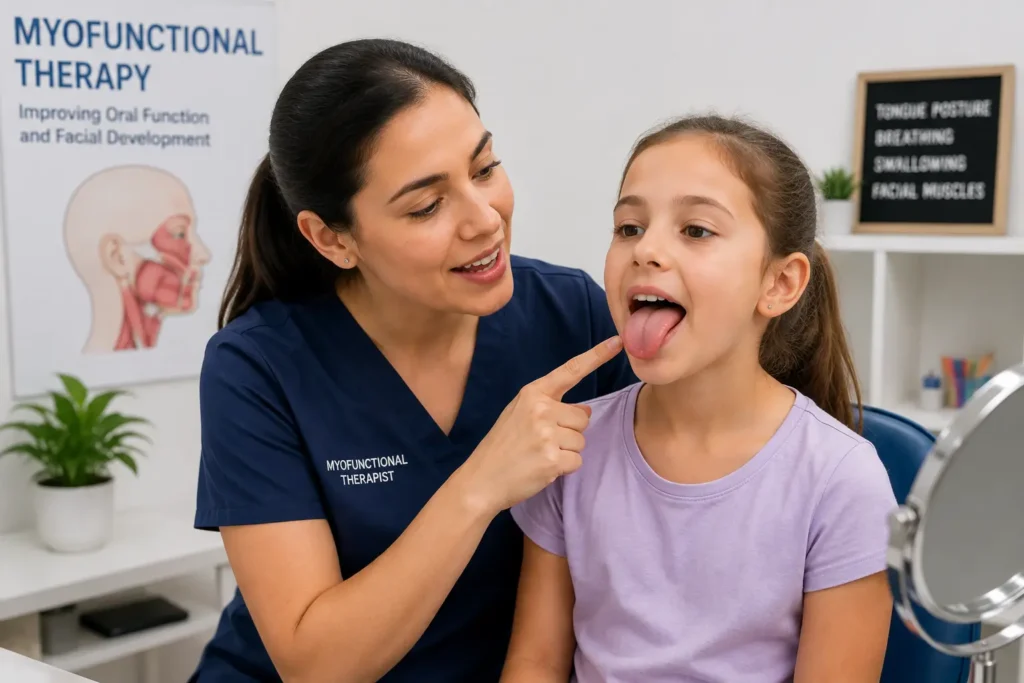
Myofunctional therapy helps the muscular functions of the face and mouth.
As described by the American Speech-Language-Hearing Association, the scope of an interprofessional team is determined by the individual’s needs. The goal is to create and keep an oral environment that facilitates the normal progression and growth of the orofacial and dental systems.
As a result, myofunctional therapy is not a group of myofacial exercises to be done by everyone in the same way. Assessment is vital since an atypical resting tongue position, mouth breathing, swallowing pattern, or oral habits can have multiple etiologies.
In some scenerios, myofunctional therapy may be conducted in conjunction with, rather than instead of, orthodontic therapy.
How Does Myobrace Fit Into Oral Development?
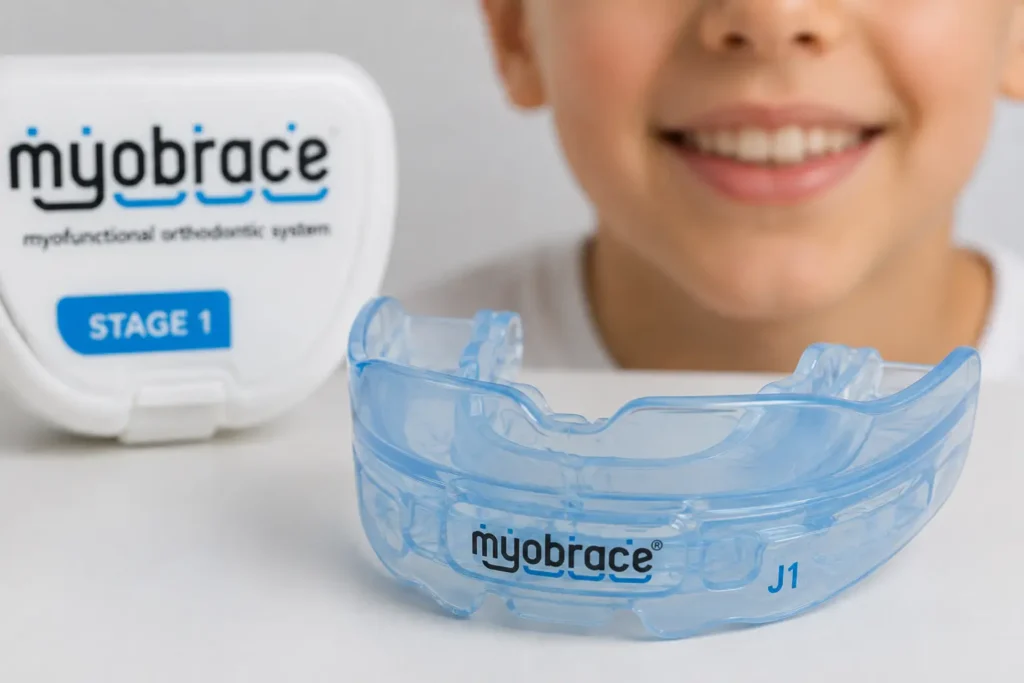
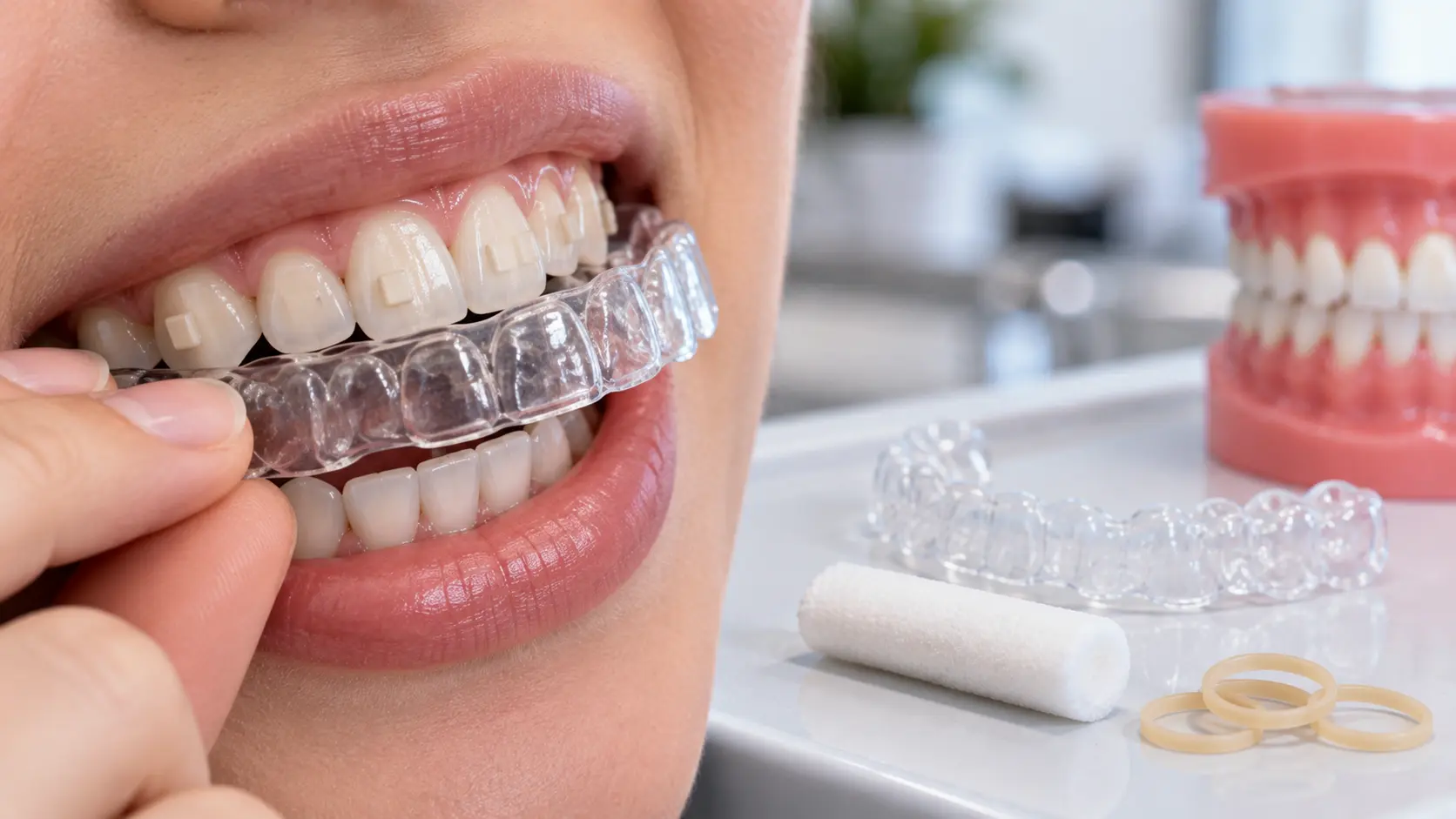
Myobrace is a removable oral appliance system that is sometimes used for children with developing dentition. Myobrace combines appliances and exercises, and even addresses the oral postures of swallowing and breathing.
What parents should understand is that Myobrace should not be used as a substitute for all orthodontic treatment. Myobrace is only appropriate based on a child’s stage of dental development, bite and comprehensive treatment consideration
MYOBRACE® — THINK PREVENTION. THINK FUNCTION. THINK GROWTH.
For appropriately selected growing patients, Myobrace Myofunctional Orthodontic Treatment focuses not only on where the teeth are, but also on the oral habits and functional factors associated with developing malocclusion.
And that is why some parents explore Myobrace as an alternative approach to conventional orthodontics.
NOT JUST STRAIGHT TEETH – A NATURALLY DEVELOPING SMILE, FACE & FUNCTION
The goal is not simply:
“Move the teeth until they look straight.”
The bigger goal is:
HELP THE CHILD DEVELOP A HEALTHIER FUNCTIONAL SMILE.
Myofunctional orthodontics aims to work with the child’s growth and development rather than focusing exclusively on mechanically moving teeth.
In suitable growing patients, gradual development of the upper dental arch may help create more room for developing teeth and improve dental arch form.
NOSE • TONGUE • JAW • AIRWAY
Healthy orthodontic development is closely connected with oral function.
Myofunctional treatment may focus on:
- Better tongue posture
- Better lip seal
- Encouraging healthy nasal breathing
- Better orofacial muscle function
- Healthy dental arch development
- Better awareness of breathing and sleep-related habits
ONE OF THE BIGGEST LIFESTYLE ADVANTAGES?
MYOBRACE IS REMOVABLE.
Unlike fixed braces, the appliance can be removed for everyday activities.
Depending on the prescribed protocol, Myobrace appliances are generally worn for a limited period during the day and overnight, rather than continuously.
Understanding the Myobrace Appliance
The treatment plan for Myobrace appliances involves wearing the device as prescribed along with exercises and counseling for behavioral changes to become part of the process.
Myobrace addresses functional habits and orthodontic concerns that often occur during childhood.
Research on Myobrace is in its early stages. Consequently, when assessing these devices, one must exercise caution when deciding that the benefits reached for the children using the device extend to every child using it.
For instance, in a 2024 systematic review, which compared Myobrace and the use of twin block appliances to address Class II malocclusion, both appliances were able to address some issues concerning overjet and skeletal and dental problems, but the authors of the review reported that twin block appliances produced more important outcomes.
Therefore, parents should not base their decision on choosing an appliance based on the claim made, but on the child’s individual diagnosis and proposed treatment.
Myobrace + Myofunctional Orthodontics
The approach incorporates concepts involving:
- Tongue posture
- Nasal breathing
- Lip function
- Orofacial muscle training
- Dental arch development
- Habit correction
These concepts overlap in some respects with discussions around mewing and orthotropic approaches, but Myobrace treatment is a structured clinical approach and should not be equated simply with “mewing.”
Research on myofunctional therapy and prefabricated orthodontic appliances is evolving, and treatment outcomes vary between patients.
Myobrace for Kids: Early Functional Support
Myobrace has been connected to children primarily because the teeth, jaws, and surrounding structures require growth and development.
Orthodontists look at different factors when they evaluate a child. Some factors include:
- The child’s bite
- The position of the jaw
- The child’s oral and tongue posture
- The child’s breathing
- The available space for developing teeth
- Overall facial and dental development
This is not necessarily to say all children require appliances.
Comprehensive examinations for children help diagnose orthodontic treatment and evaluate functional treatment at the required time. This can also help observe if at that time, there is a need for orthodontic treatment or if there should be no intervention.
Parents considering Myobrace for kids should discuss the child’s specific situation with a qualified dental professional rather than relying solely on before-and-after photographs or social media recommendations.
Jaw Expanders in Orthodontic Treatment
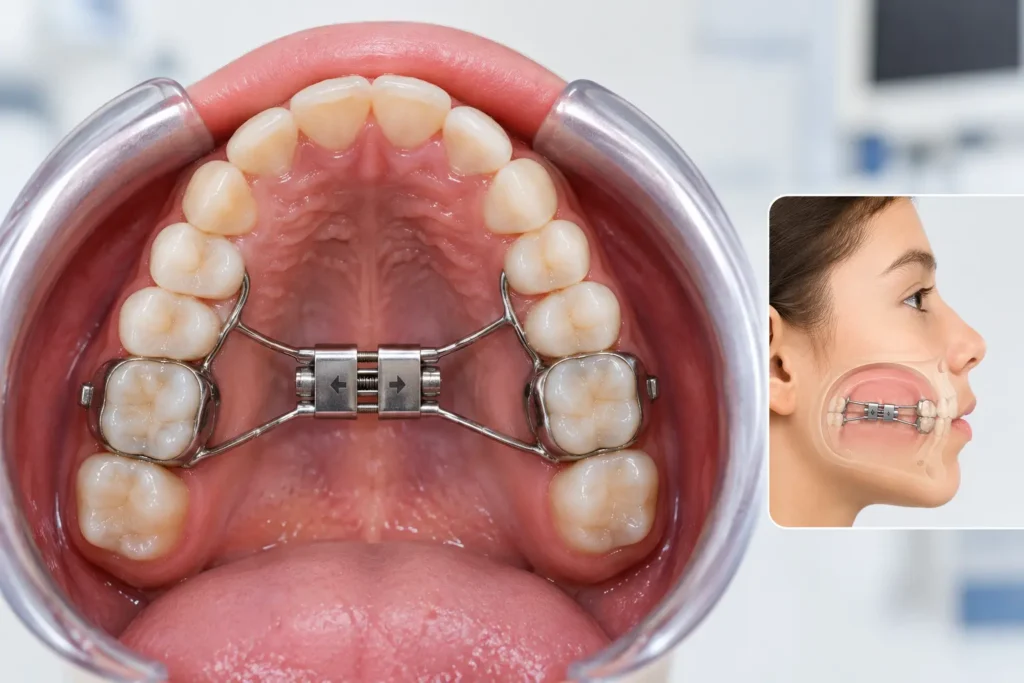
A jaw expander is a device used by orthodontists to widen parts of the mouth and/or jaw that need to be expanded clinically.
The term jaw expander is used in several different contexts, but the type of expansion required depends on the location of the jaw and the affected structure.
Transverse discrepancies in the upper jaw, such as a narrow upper arch or crossbite, are the most common situations where expansion is required.
As explained by the American Association of Orthodontists, palatal expanders are positioned on the roof of the mouth and, through gradual expansion, can widen the upper jaw. These appliances can be used for crossbite or for severe crowding and even for cases that lack sufficient space for the eruption of teeth.
Lower Jaw Expander: Key Considerations
Lower jaw expansion should not be synonymous with upper-jaw palatal expansion, as the two jaws have structural differences.
There are often different ways to describe terminology based on whether the focus is on the dental arch, the position of the teeth, or the jaw itself.
For this reason, a lower-jaw expansion is only valuable after the orthodontic evaluation has defined what is truly causing the problem with width or space.
We cannot assume that an upper-jaw expansion appliance can be moved to the lower jaw.
Upper Jaw Expander and Palatal Development
A palatal expander is attached across the upper teeth and the roof of the mouth.
Some palatal expanders can be removed, and some can be adjusted. Gradual palatal expansion can be achieved by various designs.
There are several reasons to expand the palate, but primarily it is done when the upper jaw is too narrow compared to the lower jaw. One example is a crossbite with the upper teeth biting on the inside of the lower teeth, which occurs with the back teeth.
The patient’s age and growth must be considered. Palate expansion is done on growing children and teenagers. For adults, it depends on the patient’s anatomy and the treatment plan.
Expansion devices are used to treat certain orthodontic problems. The palatal expander does not grow the jaw.
How Are These Approaches Different?
Although these approaches are sometimes discussed together, they work in different ways and have different purposes.
Approach | What it generally involves | Main consideration |
Mewing | Conscious tongue positioning | Popular online, but claims about reshaping the jaw are not supported by current evidence |
Myofunctional Appliances | Appliances that work alongside oral/facial muscle approaches | Often considered in relation to oral function and habits |
Myobrace | A removable appliance system combined with functional exercises/habit guidance | Often discussed for children and developing dentition |
Jaw Expander | Orthodontic expansion of a narrow dental/jaw structure | Used when expansion is clinically indicated |
The main difference is that mewing is a technique or habit, whereas the other methods involve professional treatment or appliances that can be part of a treatment plan.
Even among the appliance categories, there can be a big variation in the purpose of the appliance for one patient versus another.
Which Approach May Be Suitable?
Not everyone has the same specific needs.
Options must be tailored based on:
Your age and developmental stage
Type of bite problem
Positioning of your teeth
Your jaw in relation to the rest of your face
The size of your face and dental arches
Your tongue and the rest of your facial muscles
Your breathing and other oral habits
Space in your mouth for new teeth
Past orthodontic treatments
Goals from past orthodontic treatment
A child who crossbites and has a narrow upper jaw is a candidate for expansion; however, a child who exhibits oral habits may need a different approach.
Tongue posture is usually a concern for some older children; in which case, an oral function assessment is a better suggestion than an attempt to force the tongue to a specific position.
Just because an appliance is appropriate for one child does not mean it is appropriate for all children.
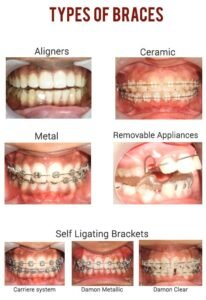
If conventional orthodontic treatment is being considered, understanding teeth braces treatment can also help patients and parents become familiar with the broader role of orthodontic appliances.
Why Professional Evaluation Matters?
Terminology that describes things within the mouth cannot be researched online, and therefore, cannot be understood.
An orthodontic assessment identifies any imbalance between the jaws and teeth, and if there are any structural or functional concerns.
The assessment may include:
Clinical exam
Bite
Alignment
Dental arch
Jaw development
Habits
Tongue position and functioning
Stage of growth
Dental records and/or x-rays
When working with young patients, growth and the development of their dentition may play a role when treatment options are being considered.
An important advantage of professional assessment is to avoid the typical phenomenon of people selecting appliances or exercises that they see someone else has used online.
The aim should never be to just treat a symptom as a quick fix. The goal should be to treat the real, hidden problem, with good evidence, that is specific to the patient.
Start Your Journey Toward Better Oral Development
Understanding your oral development and choosing the right approach starts with proper information. Mewing, myofunctional appliances, myofunctional therapy, Myobrace, and jaw expanders may be considered in different situations depending on individual needs and development.
If you’re exploring these options or have concerns about oral function, tongue posture, jaw development, or orthodontic treatment, consult a qualified orthodontist for a personalized evaluation and guidance.
Contact Dr. Mathesul Invisalign Orthodontist Braces & Dental Implant Clinic to discuss your concerns and understand which approach may be appropriate for you. Take the first step toward better oral health and informed orthodontic care.
Call us today at 8983101099 or email us at dailydentist@gmail.com to book your consultation. Take the first step toward better oral health and get professional guidance on your orthodontic treatment options.
Frequently Asked Questions
1. What is mewing?
Mewing means purposely shifting the tongue to the roof of the mouth. People have popularized this method due to claims about changing the facial structure and forming the jawline. There is not sufficient evidence to support claims that mewing is useful to change the jawline and can replace orthodontic treatment.
2. What are myofunctional appliances?
These appliances used alongside treatment consider the function of the oral and facial muscles. They are often used with sets of teeth.
3. What is Myobrace?
Myobrace is a therapy and removable appliance system that affect the dentition of children and is mainly used in the developing stages of dentition. Treatment may use a combination of appliances, exercises and guidance on changing oral habits.
4. What is a jaw expander?
This orthodontic device is designed to widen the dental arch and the jaw when it is clinically appropriate to do so. Palatal expanders are used to treat lower crossbites and insufficient arch width.
5. Are these approaches for everyone?
No, not at all. It depends on the age and the growth stage, the bite, the presence of teeth, structure of the jaws, facial and oral functions and the nature of the treatment required. An expert orthodontist can evaluate whether these approaches are right for you.
6. Can mewing replace braces or orthodontic treatment?
Mewing should not be used as a substitute for orthodontic treatment. Currently, there is no supportive evidence that mewing can change the jawline and can shape the jawline to correct orthodontic issues.
7. Is Myobrace intended for children only?
While Myobrace is closely associated with children and growing teeth, this system is actually case dependent. Whether or not a certain case qualifies is something a dental professional should assess.
8. Can adults get a jaw expander?
Some adults go through a different assessment for certain expansion methods than they would during growth. An orthodontist may look at the structure of your jaw and give you ideas about what you can expect during treatment..
9. When is it appropriate to seek treatment from an orthodontist?
It is advised that you consider an orthodontic evaluation if you, your child, or even an adult has concerns about changes in your mouth and teeth, the way your child breathes, or how your child eats and swallows.
Oral Development Guide: Wrap Up!
When researching jaw growth and orthodontics, some people come across mewing, myofunctional appliances, Myobrace and jaw expanders. The three are not the same nor are they alternatives to one another.
Mewing is a specific technique for positioning the tongue. Myofunctional therapy, on the other hand, looks at the mouth and face function as a whole. Myobrace is a system of removable appliances which clinicians tend to recommend for kids during growth. Jaw expanders are orthodontic pieces used to widen a structure when there is a need for clinical widening.
The most important aspect to understand is that orthodontic treatment is based on the needs of the individual person and should not be based upon a trending social media fad and/or a do-it-yourself kit.
If you are worried about the development of your jaws, your teeth and/or your bite, tongue posture or if you think you have bad oral habits then you should get a proper examination done. The exam will tell you the issue and illuminate whether or not you actually need treatment.